How Many Passengers Can I Carry On A Car Licence?

It’s a great question, which deserves a simple answer!
 
We know that many people unexpectedly find themselves in a position where they’re requested to drive passengers, whether it be as an addition to their employed role in Education, Care, Social Groups or from a voluntary perspective.

Most people won’t hesitate to say “Yes”. Then the questions begin:

  • “Is this legal?”
  • “Does my licence allow this?”
  • “Is there a limit to how many passengers I can carry on my car licence?”
questions-banner

Let's put your mind at rest and tackle some of those concerns (as much as possible).

“How many passengers can you carry on a car licence?” and the equally as often asked question, “Can I drive a Minibus on a Car Licence” have an officially “grey” answer.

Let’s start with “How many passengers can I carry on a car licence?”

The first area to cover is “when did you gain your full licence?

If you gained your full driving licence before 1st January 1997 you very likely hold what is classed as a D1 licence. This allows you to carry up to 16 passengers. That means you could drive a Minibus for a schoolcharitycare home, voluntary group etc. You can not drive a Minibus for a Taxi service.

We said the answers “Grey” didn’t we.

Here is where it’s slightly more complicated!

If you passed your car licence after January 1st 1997 then you may still be able to carry 16 passengers* but there are conditions that need to be met:

  • Aged 21 Years or older
  • Held a driving licence for a minimum of 2 years
  • You’re not “driving for reward”
  • You’re driving the vehicle voluntarily and only for social purposes
  • Vehicle can not weigh more than 3.5 Tonnes (4.25 when fitted with specialist equipment for disabled passengers i.e. A Wheelchair ramp)
  • You’re not towing a trailer
So, 16 passengers is the allowance in the UK (Conditions Apply)

How many passengers can I carry abroad?

Should you be asked to drive abroad you will need to contact the licencing authority of the countries you will visit.

RECAP:

  • “Is this legal?” Yes
  • “Does my licence allow this?” Yes / Yes (With Conditions)*
  • “Is there a limit to how many passengers I can carry on my car licence?” 16*
  • “Can I drive a minibus on a car licence?” Yes / Yes (With Conditions)*

*Please note: Conditions apply for driving a minibus on a standard B licence. It is the driver’s responsibility to ensure they are legally entitled to drive the vehicle. This is not, and we do not offer legal advice.

How to Remove & Reinstall NMI Quick Release Minibus Seats

Wondering how to remove and reinstall NMI quick release minibus seats? Removing and reinstalling NMI quick release minibus seats might seem tricky at first, but with the right steps, you can easily handle this task yourself. Whether you’re performing maintenance, or removing seats to allow for wheelchair passengers, this guide will walk you through the process safely and efficiently. Follow along for a hassle-free experience on how to use your wheelchair accessible minibus.

📽️ Watch the full video below for a clear, visual walkthrough:

Step-by-Step Guide: Using a NMI Removable Minibus Seats

1. Mark the Seat Positions and Prepare to Release

  • Start by marking the seat positions to ensure you can reinstall them exactly where they were.
  • Lift the white pin on both legs of the seat.
  • Pull back the red handle on both legs to unlock the seat.

2. Remove the Seat from the Vehicle

  • Gently tilt the seat forward to release it from the floor tracking.
  • Once free, carefully lift the seat out of the vehicle, ensuring not to damage the floor or surrounding area.

3. Reinstall the Seat

  • Align the front fixings with your marked positions.
  • Slot the fixings into the floor track.
  • Lower the seat down so the rear fixings lock into place.
  • Push both red handles forward to secure the seat firmly.

Removing and reinstalling your NMI quick release minibus seats is straightforward when you follow these steps carefully. Always mark your seat positions before removal to ensure a perfect fit when reinstalling. If you ever feel unsure, consult the manufacturer’s instructions or reach out to a professional for assistance. Always make sure the seat is safely secured back into place before being used again.

Introduction

At Minibus World we have been manufacturing and converting minibuses since 2007. We are often asked, ‘how many seats in a minibus’, which is not as daft a question as it might seem.

Typically, minibuses range from 9-17 seats mainly due to the fact that in a number of circumstances they can be driven on a normal car licence. For more information on minibus licencing requirements visit here.

Popular with schools, charities, societies, private hire and public transportation, the humble minibus has become a staple of the UK’s roads, providing mobility and independence.

Like any purchase, choosing the right type of minibus and right number of seats is important. This blog will help you navigate those choices.


Why Seating Numbers Are Important

At Minibus World we typically sell, lease or contract hire minibuses. Typical contract hire is for three years and for a purchase, up to 10 years in some cases. As a result, it’s important to choose the right minibus and future proof seating requirements.

A minibus is a large vehicle, ranging from 5m for a typical 9 seater to 6.4m for a 17 seater, as a result size matters! A smaller minibus is more manoeuvrable and is easier to drive, so it is important to understand how many seats are required.

A larger minibus will typically be more expensive and require extra large parking bays. On the flip side it will hold up to 17 passengers (including driver) or a combination of wheelchairs, storage and standard seating – so more versatile.
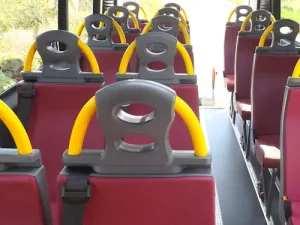
 

Typical Seating Capacities Of A Minibus

When determining ‘how many seats in a minibus’ let’s take a look at the typical configurations that our customers choose:

  • 9 Seater Minibus – the entry level minibus is popular with private hire companies and small community groups. Easy to drive, inexpensive to buy and plentiful. Based on well-known vehicles such as the Ford Transit and Peugeot Boxer. The 9 Seater can also be configured to take up to four wheelchairs, however, this will limit standard seating to three, in the vehicle cab.
  • 12 Seater Minibus – gives a combination of seating and storage, perfect sports teams, social clubs, day trips and more. As with the 9 Seat option, standard seating can be compromised in favour of wheelchair access.
  • 15 Seater Minibus – big enough for the football team and a couple of subs, depending on the platform you can either squeeze everyone into an L2 or have room for storage with an L3 or L4. But remember, with an L4 you are at 6.4m.
  • 17 Seater Minibus – the most popular minibuses are either 9 or 17 seats as they mark the entry and max level you can drive without a D1 Licence (subject to conditions, see government website for details). You can accommodate up to 6 wheelchairs with an L4 platform.

If the role of a minibus is merely to transport people short distances from A to B, you may not require storage and luggage space. However, if you are planning longer journeys it may be sensible to choose a larger minibus which will give additional legroom and storage facilities.

At Minibus World we can offer seating upgrades, secure storage, upgraded heating and air-conditioning and other creature comforts for your passengers.
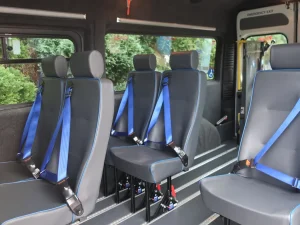
Peugeot-Boxer-Professional-9-Seat-EasyOn-Wheelchair-Accessible-Minibus-With-Onboard-Lift-For-Sale-Internal-Seats


Accessibility

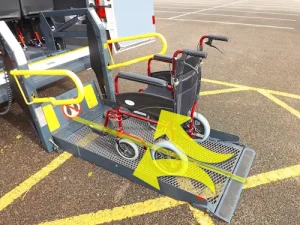
At Minibus World we offer a selection of accessibility options to assist with getting onboard and off a minibus. These include telescopic ramps, onboard lifts, underfloor lifts and spacious interiors that can accommodate multiple wheelchairs. Models like the Vauxhall Vivaro and Renault Trafic are designed to carry up to two wheelchair passengers, making them ideal for school trips and community outings. The Peugeot Boxer and Citroen Relay can also be configured to seat up to 6 wheelchairs (only with an underfloor ramp).

Our minibuses feature twin sliding doors and low-floor designs to facilitate easy boarding and alighting for wheelchair users. This not only enhances the travel experience but also ensures safety and convenience during boarding and disembarking. We also feature recessed tracks to create a completely flat floor for ease of loading.

A selection of grab rails are also available for the more able bodies to assist with their access.
 

Choosing A Minibus Manufacturer?

At CVM World we have direct partnerships with Stellantis Group (Peugeot, Vauxhall, Fiat, Citroёn), Ford and Maxus to manufacture and supply a range of vehicles. Personal preference, experience or specification may all influence customer choice. We are a Stellantis Pro-One partner (a sign of quality).

At Minibus World we also offer ‘The CVM Advantage’ which are 12 benefits that set ourselves apart from our competitors in terms of quality and features.


Can I Drive A Minibus?

If you were lucky enough to pass your driving licence after 1997, in order to drive a minibus without a D1 licence you need to meet the following criteria:

  • You must be over 21.
  • You must have held a full driving licence more than two years.
  • You do not receive payment for driving the minibus.
  • The organisation that operates the minibus is a not-for-profit, non-commercial entity. For instance, charity, club, school.
  • The maximum weight limit of the minibus is 3500kg or 4250kg with wheelchair access.
  • Always check with the government website for complete peace of mind.

For more information, click here.

The Cost Of A Minibus

At Minibus World we offer contract hire, short term hire and purchase across a range of minibuses, both new and used. As a manufacturer, we ensure every used minibus is given a clean bill of health and warranty before it leaves our factory. As a result we offer minibuses for every budget, from £20,000 to £80,000+.

Specification will have an impact on purchase and contract hire price, just like extras on a car. Electric lifts, CCTV, seatbelt safety monitoring systems and so on will all add to the cost of the vehicle. Also, a 6.4m L4 minibus with an electric lift will weigh substantially more than 5m, 9 Seater minibus – so you can expect changes in fuel economy.


In Summary

When selecting the right business for your organisation, the first question you might need answering is ‘how many seats in a minibus?’ As you have read, seating can range from 9-17 and have different configurations depending on the vehicle size, storage requirements, comfort requirements and accessibility.

Luckily, at Minibus World our sales team are on hand to help you navigate the different permutations and ensure you select the right minibus for you. At our factory in Staffordshire, we always have a range of minibuses, so if you’re not sure what you need, come and have a look.

We hope you have found this guide useful and will consider Minibus World for your next minibus.