
A minibus is a significant investment, whether used for school transport, community services, or business purposes. Maintaining your minibus in top condition is not only important for the safety of passengers but also for extending the lifespan of the minibus and maintaining its value.
Whether you have a 9-seater or 17-seater minibus, wheelchair access or assisted access, maintaining your minibus is a combination of common sense and professional upkeep. Regular maintenance can prevent costly repairs and ensure reliable performance. Here are some practical maintenance tips to keep your minibus running smoothly. Download our full guide or read on…


Maintaining your minibus in top condition requires regular checks and servicing. By following these maintenance tips, you can ensure the safety, reliability, and longevity of your vehicle. Regular maintenance not only prevents costly repairs but also provides peace of mind knowing that your minibus is always ready for the road.
At Minibus World all our minibuses go through extensive checks before we hand over to our customers. Whether you are buying new, second hand, renting or leasing; we provide ourselves on quality, reliability and responsiveness.
At Minibus World we are experts in manufacturing minibuses from 9 to 17 seats. We are often asked which is the best lift for a wheelchair accessible minibus? And as with most things in life, it is a bit ‘horses for courses’. However, in this blog we will seek to explain the options so you can make an informed decision. Alternatively, call the team at Minibus World who will be able to recommend a solution based on your needs.
The size of your minibus, seating configuration and day to day requirements will heavily influence the best lift for a wheelchair accessible minibus. You can configure a small minibus (that would normally seat 9) to hold one wheelchair but a large 17 seat minibus can be configured to hold up to 6 wheelchairs.
Once you know what size minibus you need the next consideration is use. Will you just be carrying wheelchair passengers? Will you need removable seating for able-bodied passengers? How often will you be transporting wheelchair passengers? The answers to these questions will affect your choice of lift or wheelchair ramp. To help you select your accessible minibus visit our web page.
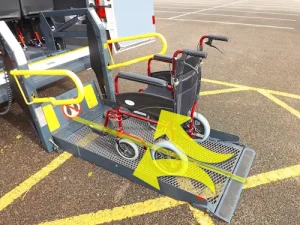
Options to consider are under floor lift, onboard lift, split onboard lift, telescopic ramp and manual fold out ramp. But which is the best lift for a wheelchair accessible minibus?

Underfloor Electric Lift (Concealed Cassette Lift)
The most versatile lift offered by Minibus World. The lift sits under the rear of the minibus when not in use, so maximum standard seating can be maintained when not carrying a wheelchair. When wheelchair carrying ability is needed, it’s a simple case of removing the NMI quick release seats to free up space for the wheelchair(s).
Popular on larger minibuses and not available on our small accessible range, the underfloor lift is fully electric and both easy and safe to use.

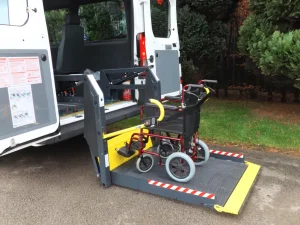
The onboard lift as the name suggests is stowed onboard the minibus when not in use. It folds up vertically, adjacent to the rear doors of the minibus, taking up some space but not a huge amount (as you can see on the picture). As with the underfloor lift, the onboard lift maximises seating when not in use and is deployed simply and safely using a handheld controller.

A variation on the onboard lift a split onboard lift has the additional benefit that the lift platform separates in half as it retracts to be stowed. This grants the driver and passengers a greater field of vision by not obscuring the rear window of the minibus. At the same time it does not compromise ease of access to the wheelchair user.
Wheelchair accessible split onboard lifts are managed by a handheld controller. These are intuitive to use, with simple button management to deploy, lower, raise and stow.

Manual ramps are best used for infrequent wheelchair journeys due to size and weight. On the positive side they are cost effective, do not require LOLER certification and if not in use do not add any weight or impact on seating capacity in the minibus. At Minibus world we offer both telescopic and manual ramps.
So the best lift for a wheelchair accessible minibus is also down to client need. At Minibus World we can offer you a demonstration of a variety of lifts and if you are not close to us in the heart of Staffordshire, you can check out our video’s on our YouTube Channel.
When it comes to student transport, safety, efficiency, and reliability are non-negotiable. At Minibus World, we understand that schools need more than just a vehicle, they need a trusted partner on the road. That’s why our 17 seat school minibus remains one of the most popular and practical solutions for educational institutions across the UK.
A 17 seat configuration strikes the perfect balance between capacity and compliance. It offers enough room for a large group, including a driver and support staff, while staying within regulations that make operation easier and cost-effective.
At Minibus World we have been manufacturing minibuses for nearly 20 years, and have ‘type approval’ from the VCA (a sign of consistent quality and safety). All minibuses manufactured by Minibus World incorporate the Car Van and Minibus World Advantage, 12 benefits that come as standard with every vehicle we produce.

There are a number of reasons why a 17 seat school minibus is one of the most popular minibus configurations, these include:
Our school-spec minibuses are tailored with educational transport in mind:

With the right MiDAS training and depending on the driver’s licence category, many schools can operate a 17-seat minibus without the need for a full D1 licence. In certain cases you can operate a minibus on a standard Category B licence. At Minibus World we can provide guidance and support on licensing queries, helping schools stay compliant while minimising costs. For more info.
As part of our commitment to sustainability, Minibus World offers low-emission and ULEZ-compliant options. This helps schools to meet local authority green standards and reduce their carbon footprint. We also offer all electric solutions including the Ford E-Transit, Maxus eDELIVER 9 and Peugeot E-Boxer.
Whether your school is looking to buy outright, lease, contract hire or short-term hire, we provide a range of funding options to suit your budget and operational needs.
Every Minibus World vehicle is backed by a full manufacturer warranty and three-year conversion warranty if purchased new. If used, you can still benefit from up to 2 years warranty and the reassurance of a 104 point vehicle check before it leaves our factory.
Should you wish to roll your service and maintenance costs into your Minibus, we can help with that also. All vehicles manufactured by Minibus World come with our ‘CVM World Advantage’, our 12-stage conversion process which puts quality at the heart of every vehicle.
From academies and local authorities to independent schools and trusts, Minibus World has years of experience delivering quality minibuses across the education sector. Our expert team ensures a smooth, consultative process from first enquiry through to delivery and beyond. A 17 seat school minibus from Minibus World is our most popular vehicle, our bread and butter!
Is your school ready to upgrade or expand its transport fleet? Discover the benefits of a 17 seat school minibus from Minibus World. Get in touch with our friendly team today for a tailored quote or to arrange a demo.


At Minibus World we have been manufacturing and converting minibuses since 2007. We are often asked, ‘how many seats in a minibus’, which is not as daft a question as it might seem.
Typically, minibuses range from 9-17 seats mainly due to the fact that in a number of circumstances they can be driven on a normal car licence. For more information on minibus licencing requirements visit here.
Popular with schools, charities, societies, private hire and public transportation, the humble minibus has become a staple of the UK’s roads, providing mobility and independence.
Like any purchase, choosing the right type of minibus and right number of seats is important. This blog will help you navigate those choices.
At Minibus World we typically sell, lease or contract hire minibuses. Typical contract hire is for three years and for a purchase, up to 10 years in some cases. As a result, it’s important to choose the right minibus and future proof seating requirements.
A minibus is a large vehicle, ranging from 5m for a typical 9 seater to 6.4m for a 17 seater, as a result size matters! A smaller minibus is more manoeuvrable and is easier to drive, so it is important to understand how many seats are required.
A larger minibus will typically be more expensive and require extra large parking bays. On the flip side it will hold up to 17 passengers (including driver) or a combination of wheelchairs, storage and standard seating – so more versatile.
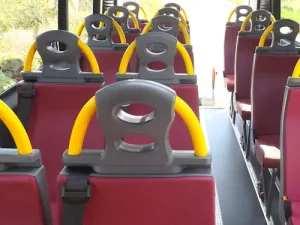
When determining ‘how many seats in a minibus’ let’s take a look at the typical configurations that our customers choose:
If the role of a minibus is merely to transport people short distances from A to B, you may not require storage and luggage space. However, if you are planning longer journeys it may be sensible to choose a larger minibus which will give additional legroom and storage facilities.
At Minibus World we can offer seating upgrades, secure storage, upgraded heating and air-conditioning and other creature comforts for your passengers.
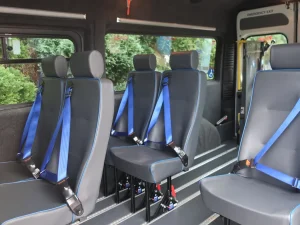
At Minibus World we offer a selection of accessibility options to assist with getting onboard and off a minibus. These include telescopic ramps, onboard lifts, underfloor lifts and spacious interiors that can accommodate multiple wheelchairs. Models like the Vauxhall Vivaro and Renault Trafic are designed to carry up to two wheelchair passengers, making them ideal for school trips and community outings. The Peugeot Boxer and Citroen Relay can also be configured to seat up to 6 wheelchairs (only with an underfloor ramp).
Our minibuses feature twin sliding doors and low-floor designs to facilitate easy boarding and alighting for wheelchair users. This not only enhances the travel experience but also ensures safety and convenience during boarding and disembarking. We also feature recessed tracks to create a completely flat floor for ease of loading.
A selection of grab rails are also available for the more able bodies to assist with their access.
At CVM World we have direct partnerships with Stellantis Group (Peugeot, Vauxhall, Fiat, Citroёn), Ford and Maxus to manufacture and supply a range of vehicles. Personal preference, experience or specification may all influence customer choice. We are a Stellantis Pro-One partner (a sign of quality).
At Minibus World we also offer ‘The CVM Advantage’ which are 12 benefits that set ourselves apart from our competitors in terms of quality and features.
If you were lucky enough to pass your driving licence after 1997, in order to drive a minibus without a D1 licence you need to meet the following criteria:
For more information, click here.
At Minibus World we offer contract hire, short term hire and purchase across a range of minibuses, both new and used. As a manufacturer, we ensure every used minibus is given a clean bill of health and warranty before it leaves our factory. As a result we offer minibuses for every budget, from £20,000 to £80,000+.
Specification will have an impact on purchase and contract hire price, just like extras on a car. Electric lifts, CCTV, seatbelt safety monitoring systems and so on will all add to the cost of the vehicle. Also, a 6.4m L4 minibus with an electric lift will weigh substantially more than 5m, 9 Seater minibus – so you can expect changes in fuel economy.
When selecting the right business for your organisation, the first question you might need answering is ‘how many seats in a minibus?’ As you have read, seating can range from 9-17 and have different configurations depending on the vehicle size, storage requirements, comfort requirements and accessibility.
Luckily, at Minibus World our sales team are on hand to help you navigate the different permutations and ensure you select the right minibus for you. At our factory in Staffordshire, we always have a range of minibuses, so if you’re not sure what you need, come and have a look.
We hope you have found this guide useful and will consider Minibus World for your next minibus.
A minibus is a significant investment, whether used for school transport, community services, or business purposes. Once you have chosen the one you want, diesel or electric, 9 or 17-seater, wheelchair access or not, make and model; how do you option your Minibus? Just like with a car, the right options can make the ownership experience more enjoyable and contribute to resale values and desirability.
At Minibus World we have a wide range of options to tailor your minibus for any adventure, be that carrying the football team, shuttling to and from school, airport runs or caring for the elderly. A Minibus World vehicle offers versatility for any situation and can be configured accordingly.
Here are our top 5 tips for choosing your optional extra’s on your minibus:
With a minibus passenger safety is a priority. A Minibus World minibus comes with individual seats and seatbelts, is a ‘type approved vehicle’ so tested to a high level and also our manufacturer partners produce safe vehicles. But you can always do more.
We offer a seatbelt alert system, grab style headrests, a safety pack with speed limit recognition, smart beam headlights, active safety brake, distance alert system and lane departure warning system. You can have ISOFIX, our safety kit which includes high vis jackets and torches and additional luggage straps. All our minibuses, new and used, are fully inspected prior to handing over to ensure they are safe and secure.
If you are planning long trips, at Minibus World we have a host of options to make the journey go quickly. Our comfort pack (available on Ford Transit Trend Model comes with cab air con, (including glove box), alarm, cruise, touchscreen sat nav, DAB digital radio/CD player, Bluetooth with USB). In addition we offer a stand-alone air conditioner and heater, diesel heater, tinted windows, fridge and more.
If you are planning longer trips in your minibus you will notice the difference in a Minibus World vehicle. Extra insulation, fully carpeted and a white reflective roof are just some of the details that make up the CVM World Advantage. Insulated from noise, heating retained for longer and a feeling of space, all important on a long trip.
Modern minibuses can have all the toys, from a dashcam to record incidents outside to CCTV to record incidents inside. Parking sensors and reversing camera, solar panels and upgraded navigation.
An approved tachograph can be fitted to commercial minibuses, navigation systems can also be upgraded.
We believe in mobility for everyone at Minibus World, so have developed a range of features to get everyone onboard. Starting with grab rails we move on to manual and electric steps, electric lifts for wheelchair accessibility and additional restraints to ensure all occupants are safely onboard.
To maximise indoor space we offer an underfloor lift, or alternatively if wheelchair access isn’t a priority we have both electric side and service doorsteps. Seats can also be specified with grab handles, for easy movement once inside the minibus, and folding handrails which protrude outside the side door for ease of access while ascending either the manual or electric step.
With a full minibus you might have lot of people with even more luggage. We have the solutions. From a roof rack and ladders to additional storage (lockable), overhead storage, quick release seating and foldable seats.
Specify from locking storage to a caged bulkhead, seat covers to protect from a muddy sports team, vinyl seating for easy wipe down or additional cant rails and restraint. Whatever your practical requirements, we can configure your minibus to suit you.
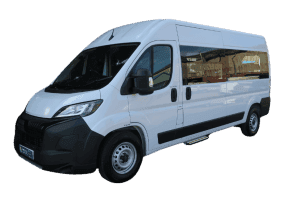
Since 2007 Car Van and Minibus World have been producing high quality Minibuses, Welfare Vans and other specialist vehicles from our factory in the heart of Staffordshire. We partner with Stellantis Group (Peugeot, Vauxhall, Fiat, Citroёn) and Ford to manufacture and supply a range of vehicles. We know how to help you option your Minibus.
Quality, reliability and responsiveness. We’re not just talking about our vehicles, but every aspect of partnering with Minibus World from Sales, Finance, Customer Care, Production and Aftersales. The CVM World Advantage also sets us aside from competitors.
We understand every customer has unique requirements and are big enough to be market leading, but remain flexible. If you value great advice, ongoing support and a business where quality and customer service come first, we are here waiting for your call at Minibus World.
