
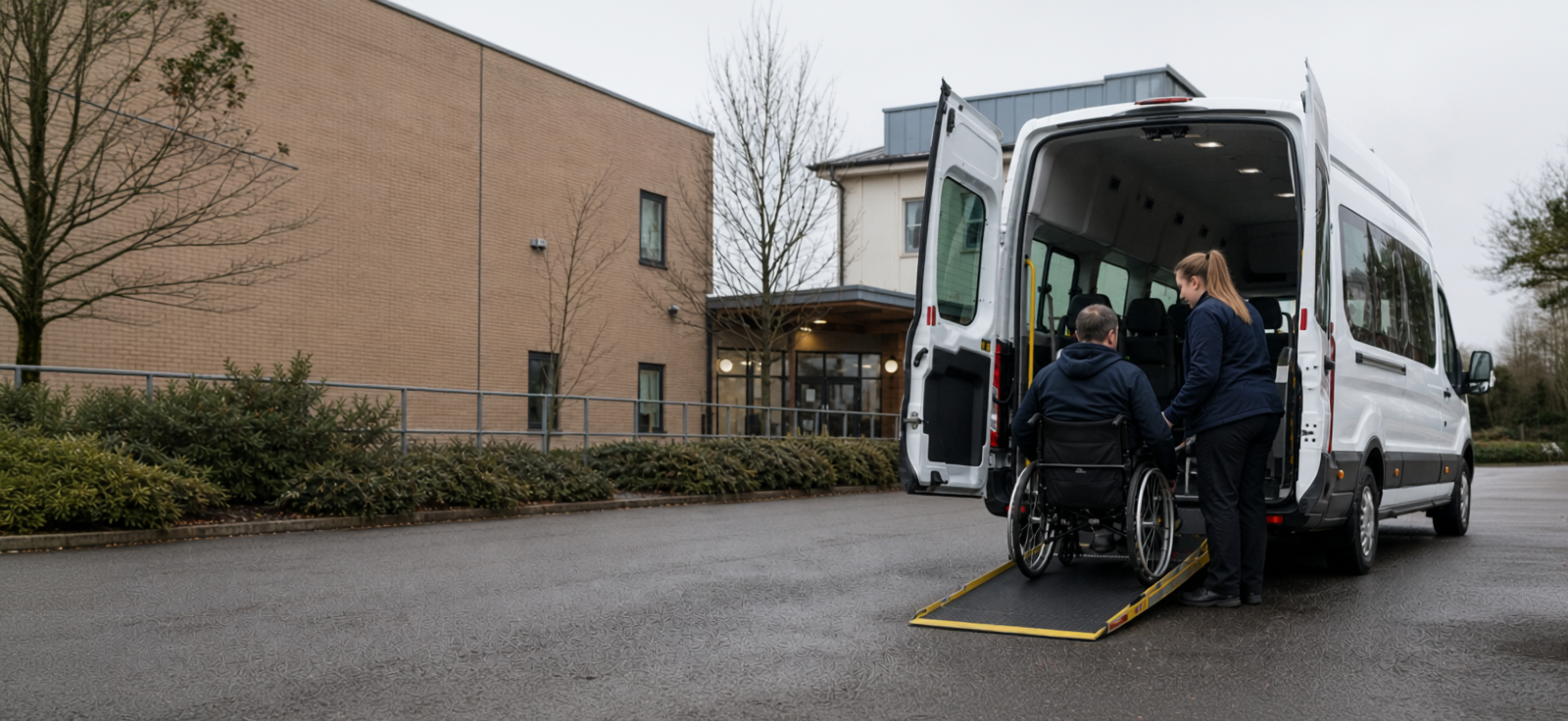

Choosing a wheelchair accessible minibus involves more than checking whether someone can enter the vehicle.
It does not tell you whether there is enough room inside, whether the wheelchair can be positioned correctly or how many passenger seats remain when a wheelchair space is being used.
A wheelchair-accessible minibus needs to work across the whole journey. That means considering the passengers, boarding equipment, interior layout, restraints and the people operating the vehicle.
Before comparing vehicles, establish who will use the minibus and what support they may need.
Consider:
These details will influence the size of the vehicle, the boarding equipment and the seating configuration required.
Both ramps and passenger lifts can provide effective access. Neither option is automatically right for every organisation.
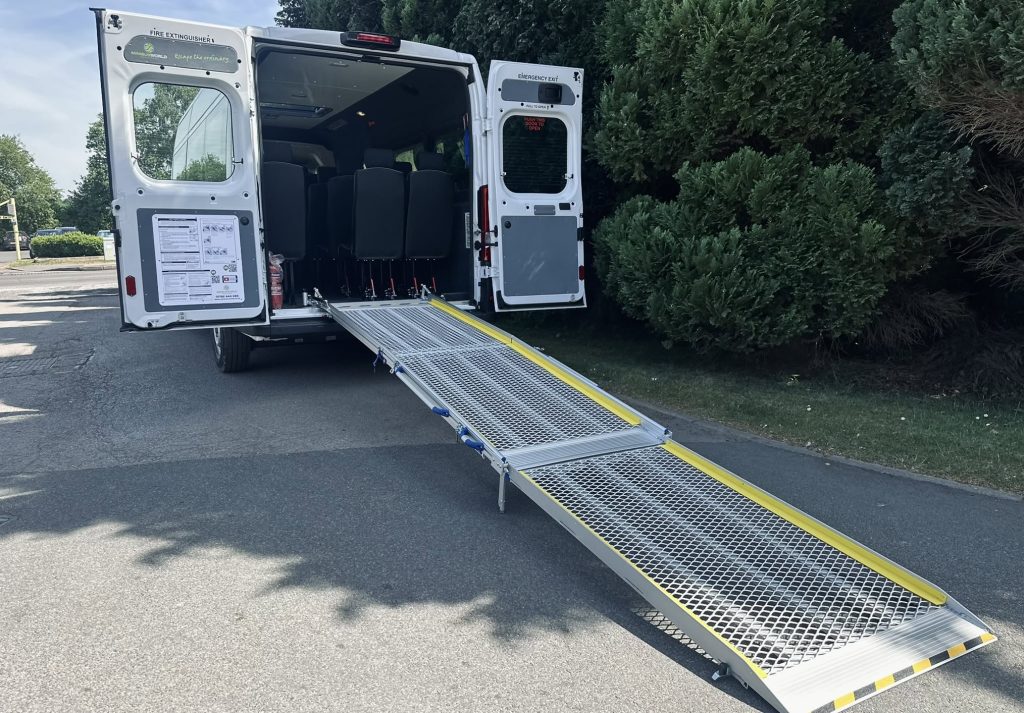
Manual ramps are relatively straightforward and do not rely on a powered lifting mechanism. However, their suitability depends on factors such as the vehicle floor height, available space behind the vehicle and the ability of staff to deploy and store the ramp safely.
The ramp must also be appropriate for the wheelchair and occupant being carried. Its approved weight capacity, positioning and operating instructions must always be followed.
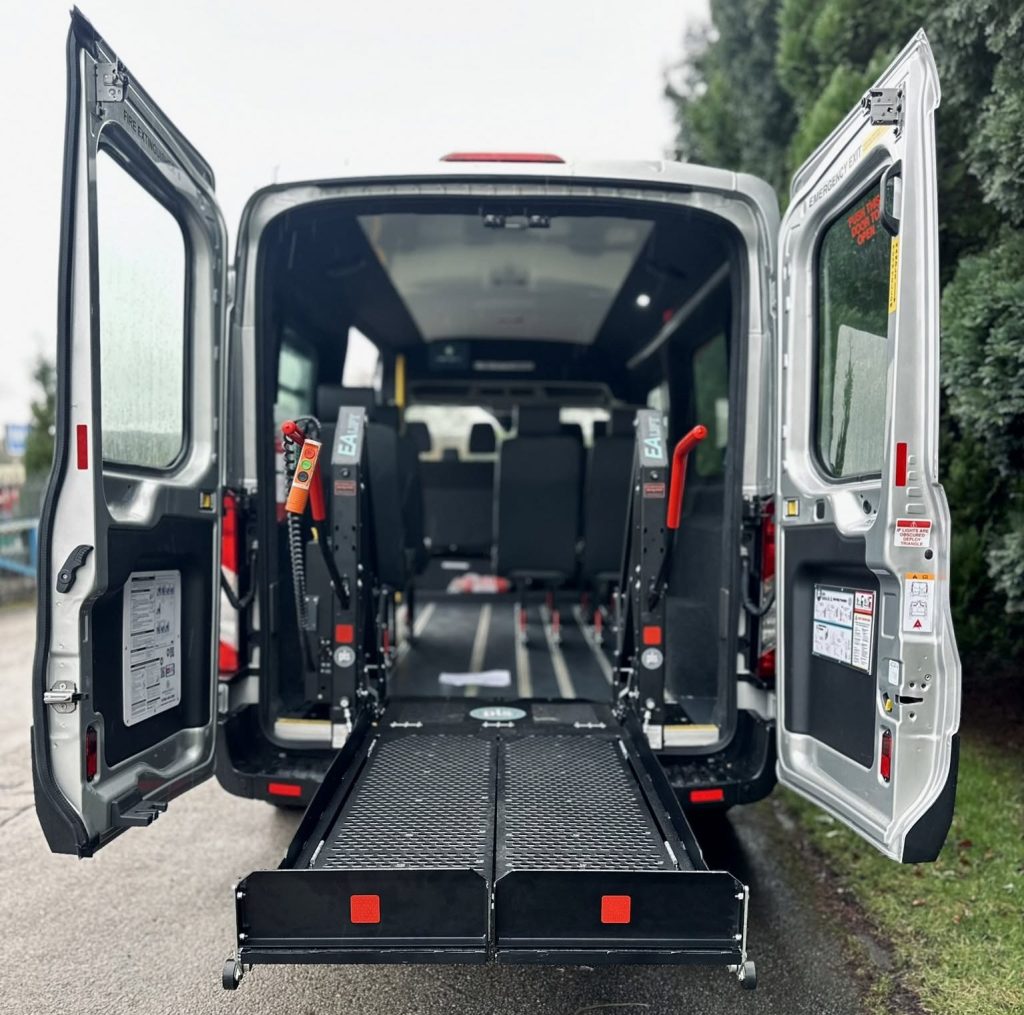
A powered passenger lift can reduce the need to guide a wheelchair up a sloping ramp. This may be helpful when transporting heavier wheelchairs or where staff need additional support during boarding.
Lifts add their own considerations. The operator must understand how to deploy the lift, use its safety features and return it securely to the travelling position. Maintenance and backup operation in the event of a power failure should also be considered.
Government guidance states that drivers or passenger assistants must be familiar with the correct use of fitted boarding equipment. Where a tool is required for manual backup operation, it should be carried on the vehicle.
Before deciding, consider the passengers, wheelchair weights, boarding locations, staff capability and how frequently the equipment will be used.
Getting through the door is only the beginning. There must also be enough room to manoeuvre and position the wheelchair correctly.
Consider:
Two wheelchairs can have very different sizes, weights and securing points. The vehicle should therefore be assessed against the actual wheelchairs it is likely to carry wherever possible.
A wheelchair-accessible minibus may be advertised with a maximum number of passenger seats. This does not necessarily mean it can carry that number of seated passengers alongside wheelchair users.
Creating a wheelchair position will often require seats to be removed, folded or repositioned.
Before choosing a vehicle, confirm:
Never assume the seated and wheelchair capacity from the headline seat number alone. The exact combination must be confirmed for the individual vehicle.
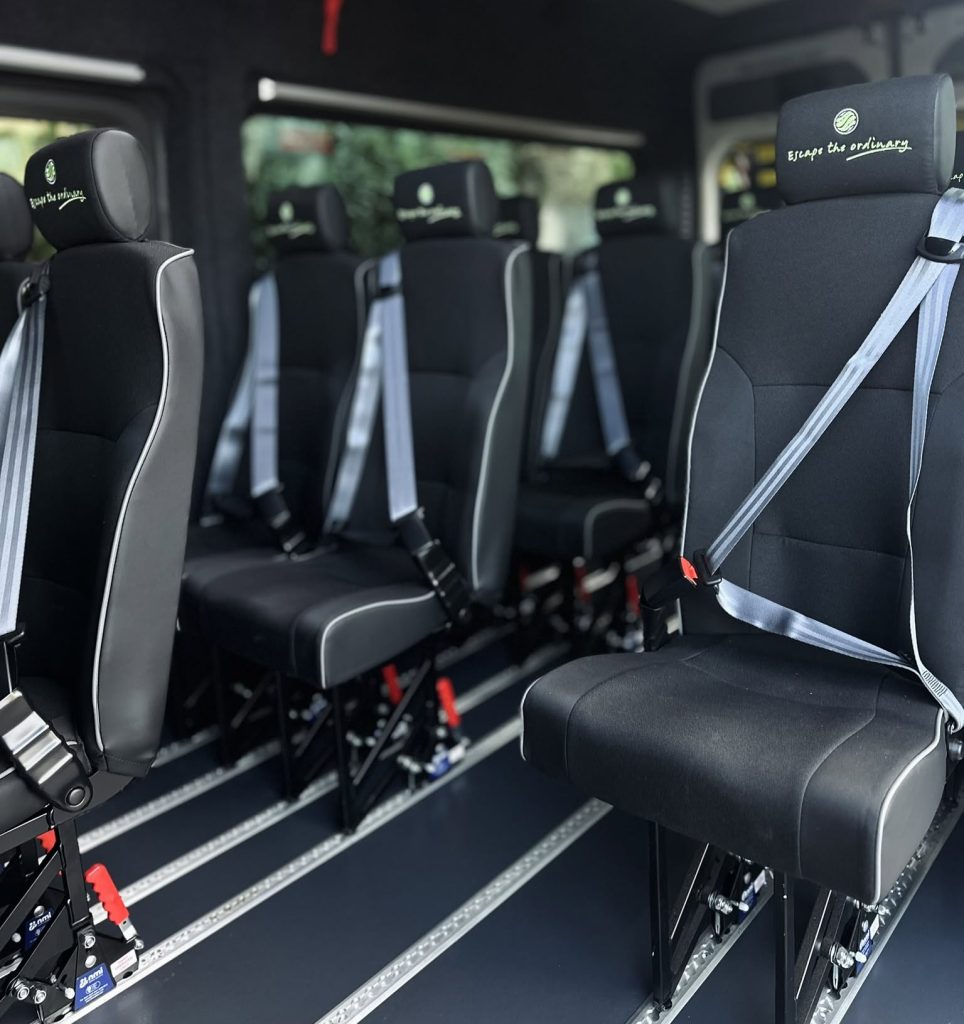
The wheelchair and the passenger both need to be secured correctly.
A wheelchair tie-down system secures the wheelchair to the vehicle. The occupant restraint protects the person travelling in it. These are separate systems and must be used according to the vehicle and equipment instructions.
Drivers and assistants should understand:
Not every wheelchair is automatically suitable for occupied transport. Manufacturer information and relevant guidance should be checked where necessary.
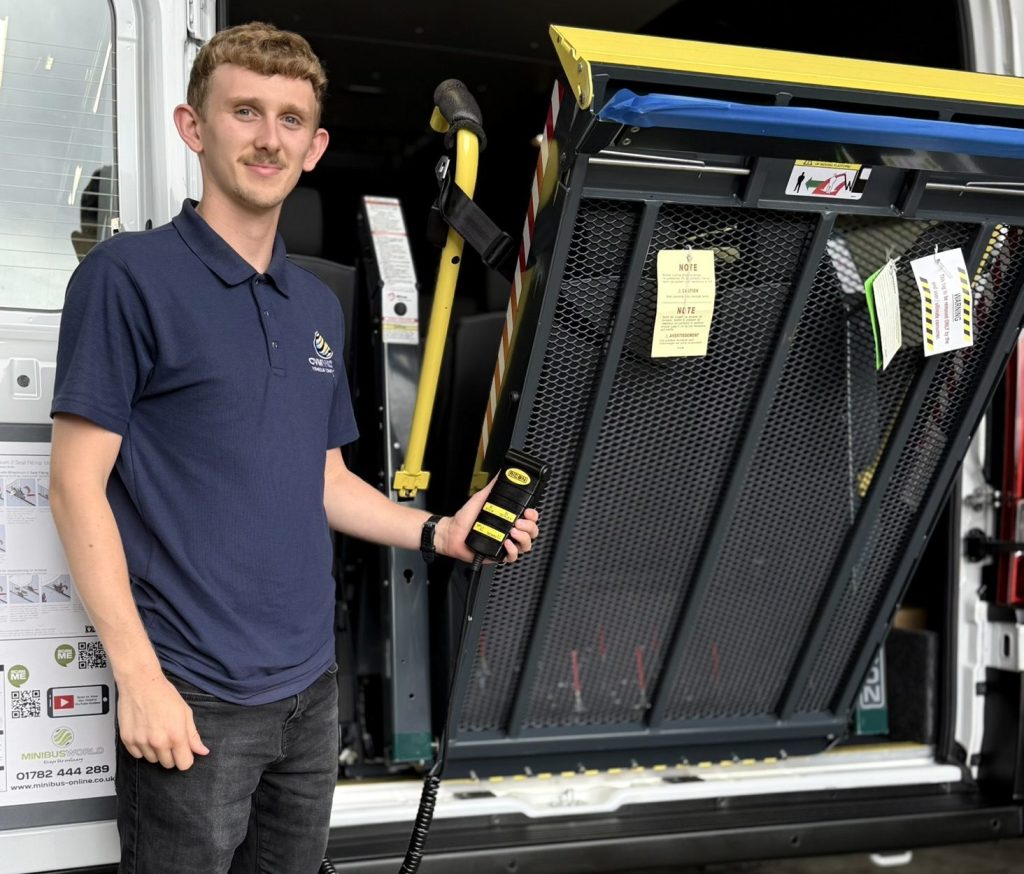
The layout must also work for the drivers, volunteers and passenger assistants using it.
Can staff deploy the ramp or lift comfortably? Can they reach the restraint points? Is there enough room to help the passenger without blocking the entrance or emergency exits?
Involving regular drivers and passenger assistants before choosing a configuration can uncover practical issues that may otherwise be missed.
Suitable training should also be arranged. Staff should not have to guess how safety equipment works.
Accessibility is not simply about fitting a wheelchair into the available space.
Passengers may spend a considerable amount of time inside the vehicle. Heating, ventilation, lighting, ride comfort and the position of the wheelchair space all affect the experience.
Where possible, passengers should be able to travel as part of the group, with an assistant nearby when required.
A technically accessible vehicle may still be unsuitable if the layout makes journeys uncomfortable or unnecessarily difficult.
Ramps, lifts, restraints and flexible seating systems should be included in the vehicle’s regular checking and maintenance process.
Drivers should report faults promptly. If equipment cannot be used safely, it should be inspected before being used again.
Checks should follow the manufacturer’s instructions and may include:
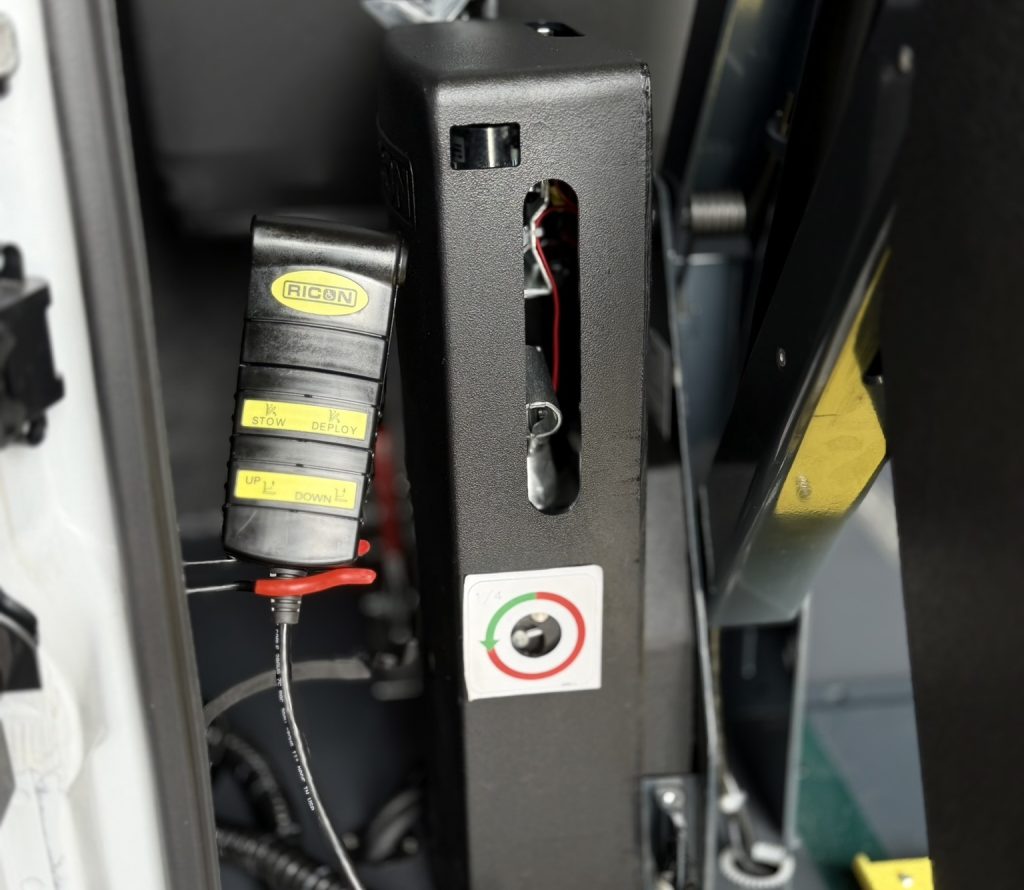
Regular checks reduce the risk of discovering a problem only when a passenger is waiting to board.
The right question is not simply, “Does this minibus have a ramp?”
The better question is, “Can our passengers complete the whole journey safely, comfortably and with dignity?”
Minibus World supplies new and used wheelchair-accessible minibuses with different sizes, boarding equipment and seating possibilities. Every requirement should be assessed individually because the right solution depends on the passengers, wheelchair positions, route, driver entitlement and intended use.
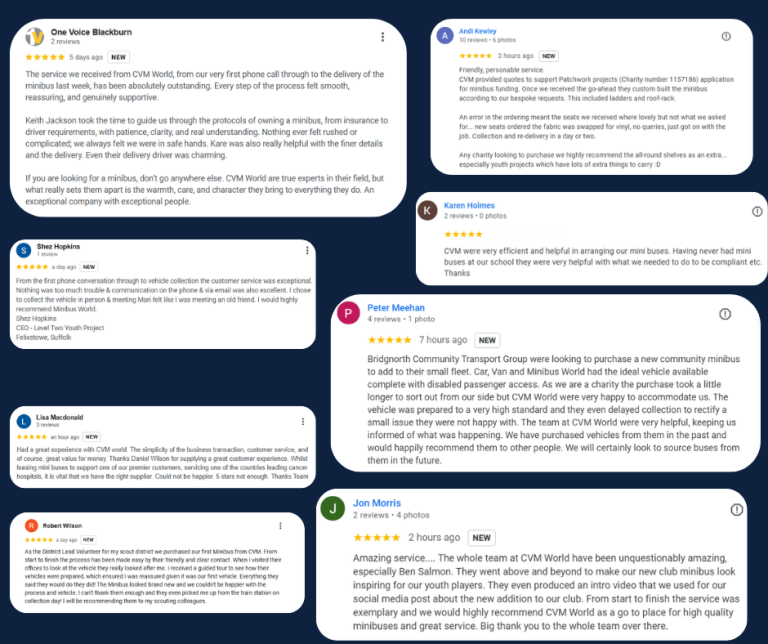
Firstly you will be partnering with a family run business that has been going since 2007. We’ve supplied over 5,000 vehicles during this time. We’re FCA authorised and regulated and work with leading finance partners. But don’t just take our word for it, take a look at our👉 Google Reviews.
The team at Minibus World are here to help, so give us a call and let’s have a chat about your next Minibus.
📞 01782 444 289
📩 info@cvmworld.co.uk
🌐 www.minibus-online.co.uk
We use cookies to ensure that we give you the best experience on our website. Please confirm you are happy to proceed.