
At Minibus World, we work closely with organisations across the UK who operate minibuses for community transport, schools, and charities. One of the most common questions we’re asked is about the Section 19 Permit – what it is, who needs one, and how it affects day-to-day minibus use.
This guide will explain everything you need to know about Section 19 Minibus Permits, so you can stay compliant and confident when operating your vehicle.
A Section 19 Permit is a special authorisation that allows certain non-profit organisations to operate a minibus without having to hold a full Public Service Vehicle (PSV) operator’s licence.
It’s designed for groups that provide transport for members or service users without running a business for profit. Examples include:
Schools and colleges transporting pupils
Community groups offering transport for elderly or disabled members
Charities running local shuttle or day-trip services
Essentially, if your organisation operates a minibus for social benefit rather than commercial gain, a Section 19 Permit is likely the right route for you.
Section 19 Permits can be issued to:
Educational establishments (e.g. schools, colleges, universities)
Charities and voluntary organisations
Community interest companies (CICs)
Local councils and non-profit community transport groups
To qualify, your organisation must not make a profit from transport activities, and any income generated should go back into supporting your core services.
The Section 19 Permit replaces the need for a PSV operator’s licence by allowing the organisation to charge for transport on a cost-recovery basis — such as covering fuel, maintenance, or driver costs.
The permit itself must be displayed on the vehicle and can cover one or more minibuses depending on your fleet. Each permit is issued to a specific organisation and is non-transferable.
You can apply for a Section 19 Permit through the Driver and Vehicle Standards Agency (DVSA) or a local issuing body, such as a community transport association.
Drivers operating under a Section 19 Permit must hold the appropriate driving licence entitlement for the minibus they are driving.
If you’re unsure about what you can legally drive, take a look at our related article —
👉 Can I Drive a Minibus? — which explains everything you need to know about driving licence categories, age limits, and exemptions.
At Minibus World, we specialise in bespoke minibus conversions that meet the specific needs of Section 19 operators.
From wheelchair-accessible minibuses to 8–17 seat configurations, our vehicles are built to the highest safety and comfort standards — ideal for schools, care organisations, and community transport services.
Every minibus conversion can be tailored to suit accessibility, seating layout, and storage needs while remaining fully compliant with DVSA and UK safety regulations.
A Section 19 Permit typically lasts for up to five years, after which it must be renewed. During that period, it’s essential to ensure that:
Your vehicles are properly maintained and MOT-compliant
All drivers are appropriately licensed and trained
Your services continue to meet the non-profit eligibility criteria
At Minibus World, we understand that compliance and reliability are crucial for organisations operating under a Section 19 Permit.
That’s why we offer:
✅ Expert advice on suitable vehicle types for your permit
✅ Custom-built minibus conversions for community and school use
✅ Accessibility and wheelchair-friendly configurations
✅ Nationwide delivery and aftersales support
Our goal is to make owning and operating a compliant minibus as simple and stress-free as possible.
Operating under a Section 19 Minibus Permit allows non-profit organisations to provide essential transport services safely and legally. Whether you’re part of a school, charity, or community group, understanding your responsibilities and choosing the right vehicle are key to staying compliant.
If you’re considering a new or converted vehicle for your organisation, contact Minibus World today for expert advice and tailored minibus solutions.
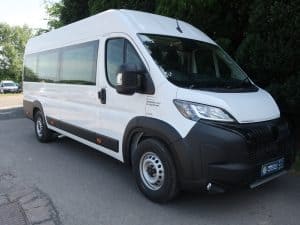
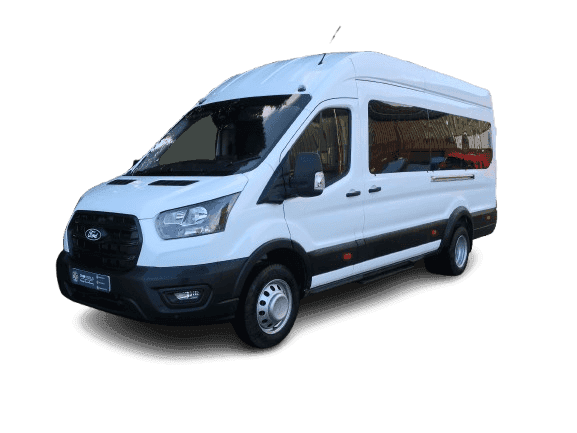
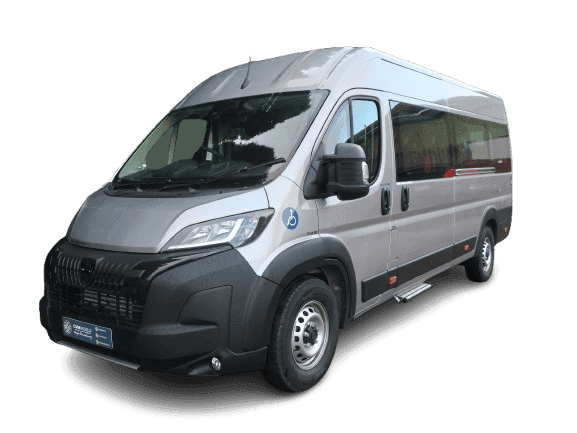


With the move away from the internal combustion engine (ICE) towards electric cars, vans and minibuses, many people are wondering can I drive an electric minibus? This is largely down to the increased weight of the vehicle, which affects the size of the minibus that can be driven.
If you hold a standard driving licence (Category B) the maximum weight of a vehicle you can drive including up to 8 passengers or other cargo is 3,500kg. So for example, a nine-seater minibus such as a Ford Tourneo fits the bill perfectly
If you hold a Category D1 licence, which you would have been issued with automatically if you passed your driving test before January 1st 1997, you can carry up to 16 passengers. Plus, if the minibus is fitted with specialist equipment for carrying disabled passengers, the weight limit increases to 4,250kg.
You may also drive 17-seater minibus (16 passengers plus driver) if you received your driving licence after January 1st 1997 subject to fulfilling a number of conditions. For more information visit the government website. A word of advice, always make sure you have the right licence and authorisation to drive a commercial vehicle.
The BVRLA has been lobbying the government to upgrade vehicle weight limits which can be driven on a standard driving licence (Category B) due to the fact electric vehicles are substantially heavier than their ICE counterparts. This is to help clarify the question, can I drive an electric minibus?
As a result from June 10th 2025, the standard weight (for zero emissions vehicles only) has been raised to 4,250kg and for vehicles including specialist equipment to carry disabled passengers this increases to 5,000kg. The changes to the legislation are to be found here.

The change in legislation provides increased flexibility for drivers asking the question can I drive an electric minibus? It means a number of vehicles meet the weight criteria to qualify for drivers holding a Category B, D1 or are exempt from Category D1 as per the government criteria.
At Minibus World we have a range electric vehicles which fit the new zero emissions criteria weight increase. As a result we can offer our customers the new Ford E-Transit, new Peugeot E-Boxer, Maxus eDELIVER 9 and Ford E-Tourneo, all of which can be configured to suit your organisations seating requirements.
If you’re not familiar with electric minibuses and their benefits please visit our website page for more information.

The change to vehicle weights from June 10th 2025 makes the question, can I drive an electric minibus much easier to answer now. By increasing the weight limit the government has opened up new opportunities for organisations to consider an electric minibus.
If you were looking for more information whether you can drive a diesel minibus, check out our other blog here.
At Minibus World we are here to navigate you through your minibus purchase, having built and supplied thousands since 2007. Get in touch with the team.
Minibus World, based in Stoke-on-Trent, Staffordshire, is a trusted UK provider of wheelchair accessible minibuses and lifting equipment. Our LOLER Compliant Wheelchair Access Minibus are certified to the Lifting Operations and Lifting Equipment Regulations 1998 (LOLER), giving you peace of mind when transporting wheelchair users.
Whether you’re part of a school, charity, or social club, understanding LOLER and your responsibilities can help you stay compliant and, most importantly, keep your passengers safe.
LOLER is a set of regulations designed to reduce risks associated with lifting equipment. These rules apply to anyone who owns, operates or controls such equipment in the workplace — including tail lifts used in wheelchair accessible minibuses.
Under LOLER, all lifting equipment must be:
LOLER applies to a wide range of lifting gear — not just industrial cranes. If your minibus is fitted with:
… then LOLER compliance is essential.
If you’re an employer, minibus operator, or even a self-employed driver who provides or controls lifting equipment — the answer is yes. You are legally responsible for ensuring the equipment is safe to use and regularly inspected. Therefore, a LOLER compliant wheelchair access minibus is essential.
For schools, care providers and community transport operators, this means making LOLER checks part of your regular maintenance schedule.
A thorough examination is a detailed inspection of lifting equipment by a competent person — someone with the technical knowledge and experience to identify potential risks. After inspection, they must provide a signed written report.
These checks are required at least every six months for equipment used to lift people.
At Minibus World, we offer a wide range of LOLER compliant wheelchair lifts. Here’s a quick overview of the main options available:
Underfloor (Cassette) Lift
Ideal for larger minibuses, these lifts are hidden under the vehicle and don’t take up internal space. They maximise passenger seating — up to 17 seats — and deploy easily via handheld controller.
Best for: larger school or care minibuses
Keeps interior space free

Onboard Lift
Mounted inside the vehicle, this lift is compact and suitable for smaller minibuses. Some cabin space is required, but it’s quick and simple to operate.
Best for: medium-sized vehicles
Easy access with minimal setup

Split Onboard Lift
This lift functions like the onboard lift but splits in half when stowed, preserving rear window visibility. It’s a great blend of functionality and design.
Best for: operators who need full rear visibility
User-friendly with clear controls

Ramps and Winches
For those preferring manual solutions, we also offer:
These are reliable, cost-effective alternatives to powered lifts.
We don’t just sell minibuses, we deliver compliance, safety and confidence. Here’s what sets us apart:
Explore our range of vehicles with fitted electric lifts, or browse our full selection of Wheelchair Accessible Minibuses for ramp and winch options.
Need Advice? Whether you’re replacing an existing vehicle or buying your first accessible minibus, we’re here to help. Contact our friendly team today for expert guidance and a no-obligation quote.
